
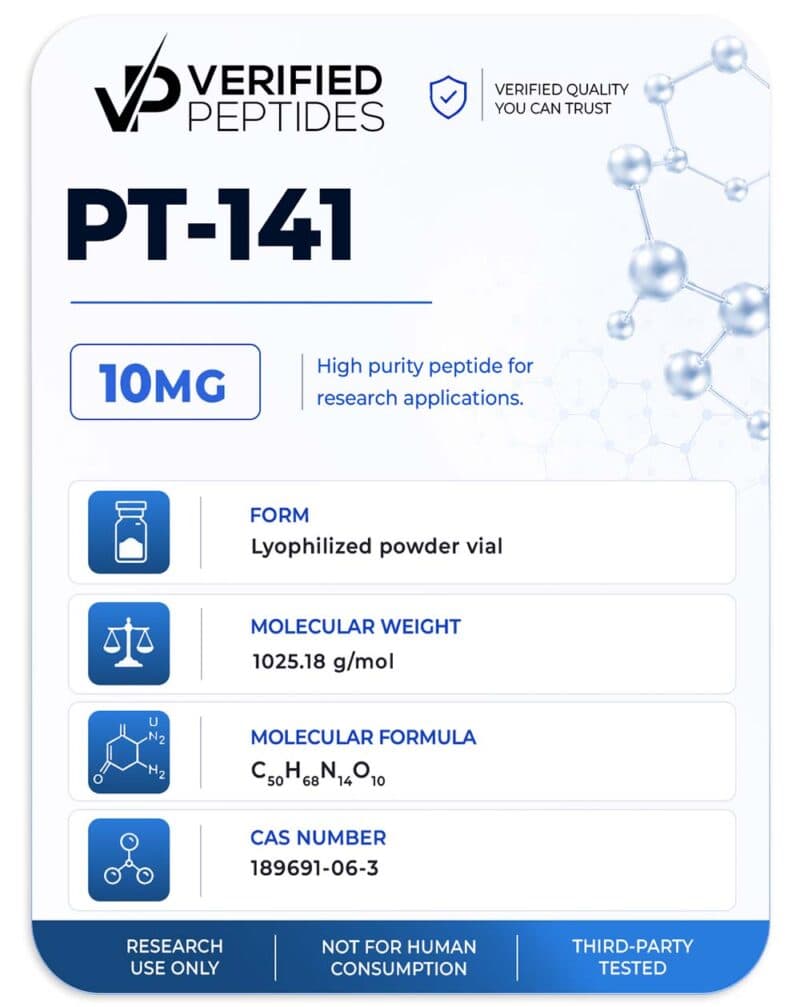
PT-141 Peptide (10MG)
0What is PT-141?
PT-141 is a synthetic peptide analog of α-melanocyte-stimulating hormone (α-MSH) that functions as a melanocortin receptor agonist, with affinity for central melanocortin receptors, particularly MC3 and MC4. These receptors are part of proopiomelanocortin (POMC) signaling systems known to influence motivated behaviors within hypothalamic and limbic circuits. Unlike peripherally acting agents, PT-141 operates through central nervous system pathways, specifically targeting brain regions involved i
Frequently Asked Questions
What is PT-141?
PT-141 is a synthetic peptide analog of α-melanocyte-stimulating hormone (α-MSH) that functions as a melanocortin receptor agonist, with affinity for central melanocortin receptors, particularly MC3 and MC4. These receptors are part of proopiomelanocortin (POMC) signaling systems known to influence motivated behaviors within hypothalamic and limbic circuits. Unlike peripherally acting agents, PT-141 operates through central nervous system pathways, specifically targeting brain regions involved i
What is a melanocortin receptor agonist and how does PT-141 fit?
A melanocortin receptor agonist activates melanocortin receptors involved in motivated behaviors. PT-141 is a synthetic analog of α-melanocyte-stimulating hormone (α-MSH) that engages central melanocortin receptors, particularly MC3 and MC4, which are part of proopiomelanocortin (POMC) signaling systems in hypothalamic and limbic brain regions.
What do female rat models reveal about melanocortin receptor agonists and desire-like behaviors?
They demonstrate that melanocortin receptor activation can selectively enhance appetitive initiation of sexual behavior without affecting receptive reflexes, general activity, or sexual reward processing. This suggests that melanocortin pathways may represent a specific neural substrate for sexual motivation or desire-related drive states in the central nervous system.
What PT-141 dosing was used in the female rat study?
The study administered PT-141 subcutaneously at doses of 0, 50, 100, or 200 µg/kg, with treatment given five minutes before behavioral testing. Significant effects on appetitive behaviors were observed at 100 and 200 µg/kg doses. These amounts represent rat-model dosing only in controlled laboratory settings and cannot be converted to human usage or extrapolated outside of research contexts. 📚 Study Reference Seftel A. Selective facilitation of sexual solicitation in the female rat by a melanoc