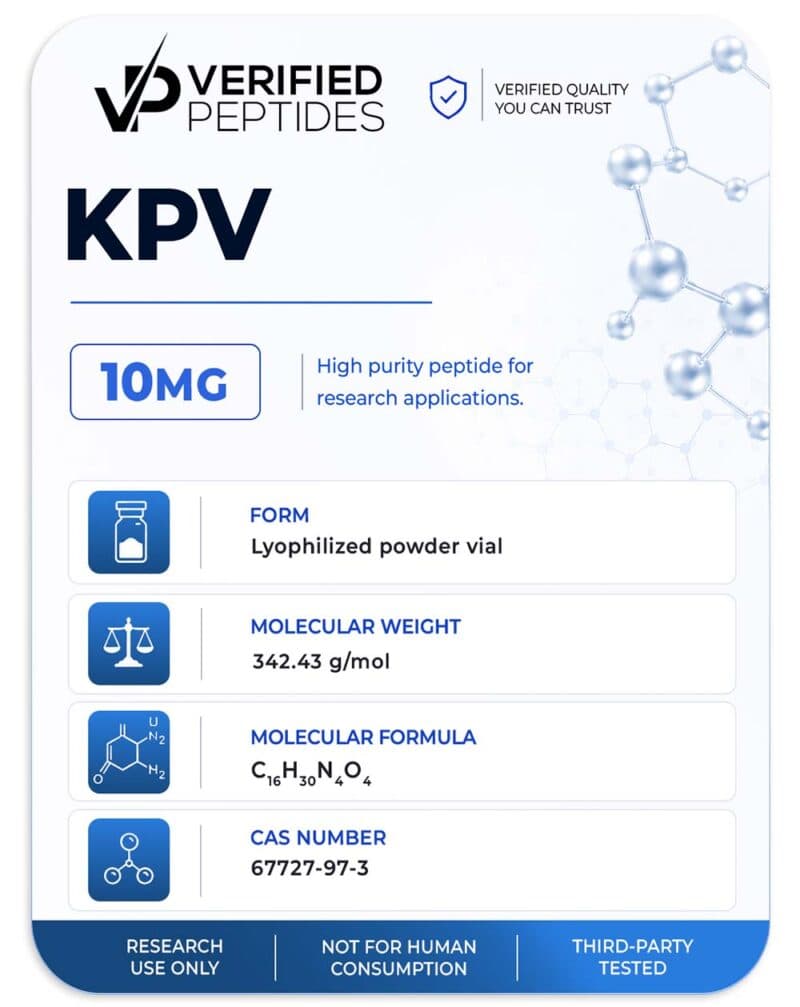
KPV Peptide (10MG)
0What is KPV?
KPV is a tripeptide (lysine-proline-valine) corresponding to positions 11-13 of α-melanocyte-stimulating hormone (α-MSH), a member of the melanocortin peptide family derived from the pro-opiomelanocortin (POMC) precursor protein. Despite being only three amino acids long—representing the COOH-terminal fragment of the full 13-amino acid α-MSH molecule—KPV retains the potent anti-inflammatory and antipyretic signaling activity associated with the complete peptide. This remarkable functional preser
Frequently Asked Questions
What is KPV?
KPV is a tripeptide (lysine-proline-valine) corresponding to positions 11-13 of α-melanocyte-stimulating hormone (α-MSH), a member of the melanocortin peptide family derived from the pro-opiomelanocortin (POMC) precursor protein. Despite being only three amino acids long—representing the COOH-terminal fragment of the full 13-amino acid α-MSH molecule—KPV retains the potent anti-inflammatory and antipyretic signaling activity associated with the complete peptide. This remarkable functional preser
What are melanocortin peptides and how does KPV fit in?
Melanocortin peptides are amino acid sequences derived from the pro-opiomelanocortin (POMC) precursor protein, including α-melanocyte-stimulating hormone (α-MSH) and adrenocorticotropic hormone (ACTH). KPV (lysine-proline-valine) is the COOH-terminal tripeptide corresponding to positions 11-13 of the 13-amino acid α-MSH molecule. Despite representing only 23% of the full-length peptide, KPV retains complete anti-inflammatory and antipyretic activity, making it a compact and valuable research too
What do these findings suggest about balancing brain immunity?
The findings suggest the CNS possesses endogenous melanocortin-based mechanisms for moderating microglial inflammatory activity. Both exogenously applied KPV and endogenously produced α-MSH suppress TNF-α, IL-6, and NO output through cAMP-dependent pathways. The discovery of a functional autocrine circuit—where microglia produce α-MSH that self-limits their inflammatory response—reveals an intrinsic regulatory system that may be relevant for preventing excessive neuroinflammation. This positions
What concentrations of KPV were tested in this study?
KPV was tested at 1, 10, 25, 50, and 100 µM concentrations in N9 microglial cell cultures, with 10 µM producing peak inhibitory effects on TNF-α, IL-6, and NO production. The dose-response curve showed a U-shaped (non-monotonic) pattern where intermediate concentrations were most effective. These represent in vitro experimental culture conditions in immortalized mouse cells and do not translate to dosing recommendations for any other context or application.