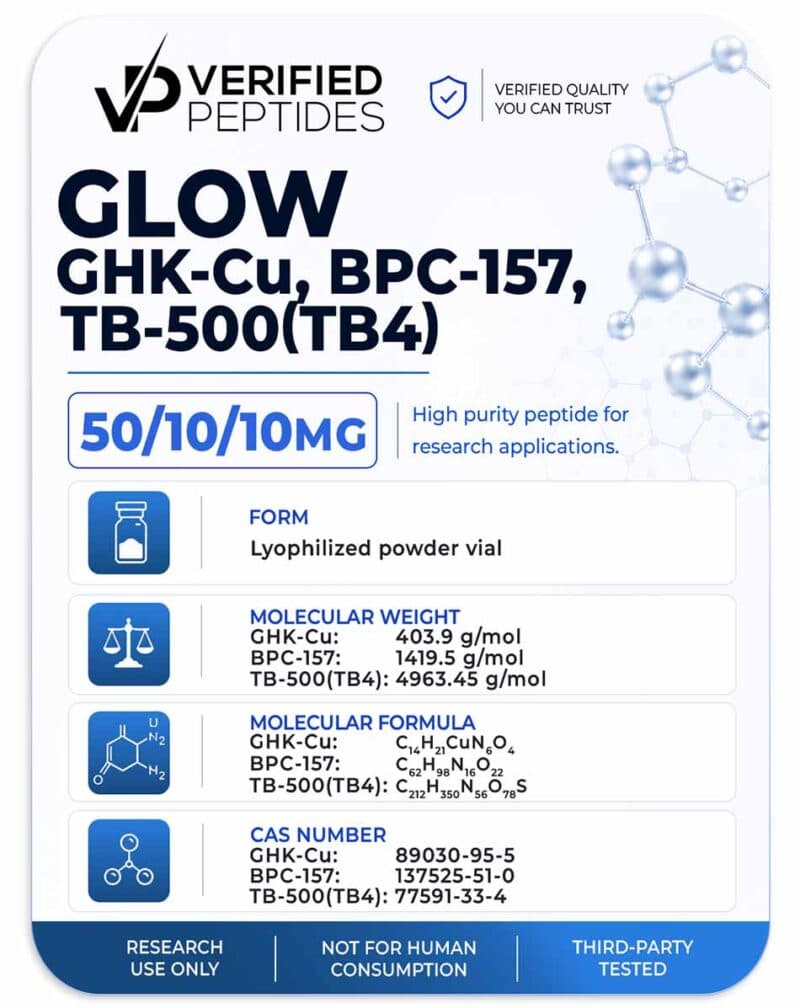
Blend: GHK-Cu BPC-157 TB-500 Peptide (GLOW)
0What is the BPC-157 + TB-500 + GHK-Cu Peptide Blend?
This comprehensive blend combines three distinct regenerative peptides—BPC-157, TB-500 (Thymosin Beta-4), and GHK-Cu—each with unique mechanisms that complement and amplify overall tissue repair, recovery, and protection in animal models. BPC-157 is a stable gastric pentadecapeptide derived from gastric juice, demonstrating remarkable capacity for tendon recovery and vascular restoration through periosteal activation and nitric oxide pathway modulation. TB-500 (Thymosin Beta-4) is a 4.96 kDa act
Frequently Asked Questions
What is the BPC-157 + TB-500 + GHK-Cu Peptide Blend?
This comprehensive blend combines three distinct regenerative peptides—BPC-157, TB-500 (Thymosin Beta-4), and GHK-Cu—each with unique mechanisms that complement and amplify overall tissue repair, recovery, and protection in animal models. BPC-157 is a stable gastric pentadecapeptide derived from gastric juice, demonstrating remarkable capacity for tendon recovery and vascular restoration through periosteal activation and nitric oxide pathway modulation. TB-500 (Thymosin Beta-4) is a 4.96 kDa act
What makes each peptide unique in this combination?
BPC-157 is unique for achieving structural reattachment that normally fails to heal spontaneously—no other peptide has demonstrated muscle-to-bone or tendon-to-bone integration. TB-500 is distinct as a small actin-sequestering molecule rather than a traditional growth factor, enabling broad tissue diffusion and coordinating cellular migration with strong antifibrotic effects. GHK-Cu is unique as a copper-binding tripeptide with both regenerative and neuroprotective properties, shown to reduce am
What types of injuries or conditions might benefit from this combination?
Based on individual peptide research: musculoskeletal injuries requiring structural reattachment (tendon ruptures, muscle tears, ligament injuries), post-surgical healing especially involving tissue reattachment, chronic wounds with impaired healing, conditions involving excessive fibrosis or scarring, ischemic injuries with compromised blood supply, and potentially neurological conditions given GHK-Cu's documented neuroprotective effects. However, these applications remain theoretical pending c
What is the evidence for angiogenic synergy in this combination?
All three peptides promote angiogenesis through distinct mechanisms: BPC-157 through nitric oxide pathway modulation affecting vascular tone and endothelial function, TB-500 through direct effects on endothelial cell migration and integrin-linked kinase pathway activation, and GHK-Cu through VEGF expression stimulation and TGFβ1 signaling regulation. This triple-pathway angiogenic stimulation theoretically creates robust vascular restoration, particularly relevant for injuries with compromised b
What is the neurological rationale for including GHK-Cu?
GHK-Cu demonstrated remarkable effects in 5xFAD Alzheimer's mice: reduced amyloid plaques in multiple brain regions, decreased neuroinflammation (measured by MCP-1 staining intensity), and improved cognitive performance (Y-maze testing) approaching wild-type control levels. TB-500 also showed neuroprotective effects—preventing hippocampal neuron loss from excitotoxicity and promoting recovery in multiple sclerosis models. Together with BPC-157's vascular support, the combination theoretically pr
What was the timeline for healing in BPC-157 studies?
In rat quadriceps detachment models, ultrasound imaging showed BPC-157 closed the muscle-bone gap by 21-28 days post-surgery. Complete structural and functional recovery was documented at 90 days with MRI confirmation of full reattachment, organized collagen deposition, and muscle fiber integration into newly formed cortical bone. Functional improvements (walking recovery and motor function indices) appeared progressively throughout this period, with reversal of contracture and preservation of m