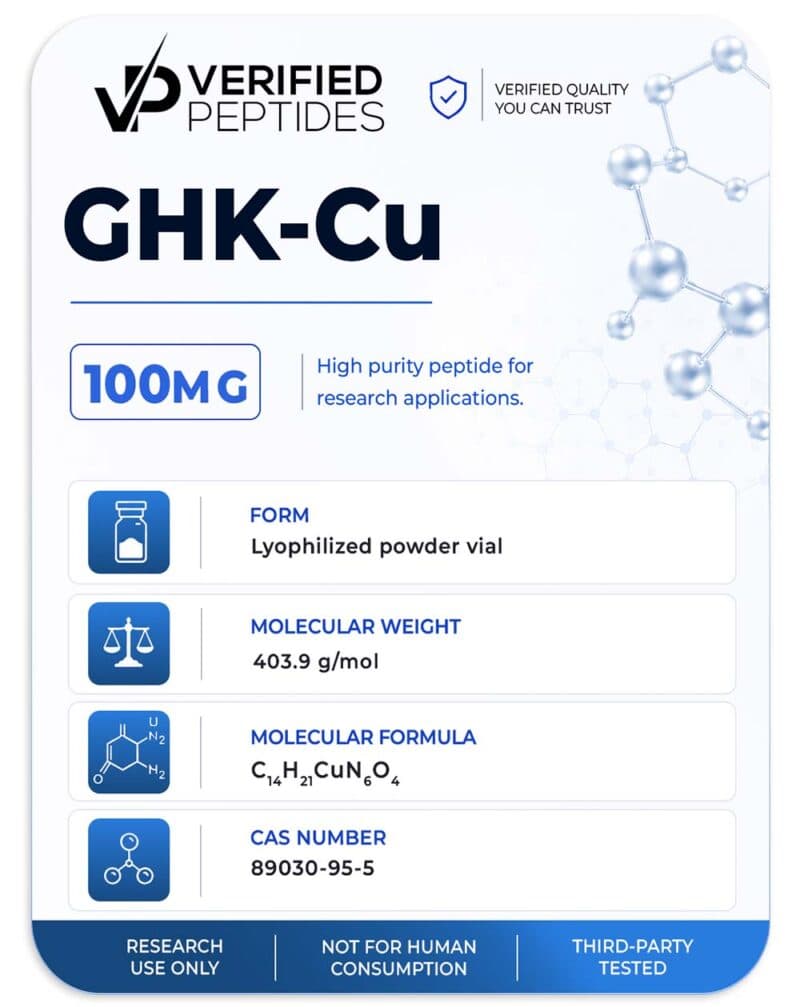
GHK-Cu Copper Peptide (100MG)
0What is GHK-Cu?
GHK-Cu (glycyl-L-histidyl-L-lysine bound to copper) is a naturally occurring copper-binding tripeptide known for its regenerative, antioxidant, and anti-inflammatory functions. It supports angiogenesis, tissue repair, and the modulation of transforming growth factor beta 1 (TGFβ1) signaling. Recent research has expanded beyond its well-known wound healing and skin regeneration properties to explore its neuroprotective potential in Alzheimer's Disease models, where it demonstrates the ability to
Frequently Asked Questions
What is GHK-Cu?
GHK-Cu (glycyl-L-histidyl-L-lysine bound to copper) is a naturally occurring copper-binding tripeptide known for its regenerative, antioxidant, and anti-inflammatory functions. It supports angiogenesis, tissue repair, and the modulation of transforming growth factor beta 1 (TGFβ1) signaling. Recent research has expanded beyond its well-known wound healing and skin regeneration properties to explore its neuroprotective potential in Alzheimer's Disease models, where it demonstrates the ability to
What are the results of the newest GHK Cu studies?
The GHK-Cu latest research in 5xFAD transgenic mice demonstrated that intranasal GHK-Cu significantly reduced amyloid plaque formation, lowered neuroinflammation markers, and improved cognitive outcomes. The findings suggest that GHK-Cu acts through multiple biological pathways to counteract Alzheimer's-related degeneration.
What are the anti-inflammatory effects of GHK-Cu in Alzheimer's models?
GHK-Cu reduced inflammation in the brain by decreasing MCP-1 (monocyte chemoattractant protein-1) staining intensity in the frontal cortex and hippocampus. This reduction indicates lower immune activation and diminished neuroinflammatory stress, which are critical in slowing Alzheimer's progression.
What is the GHK-Cu peptide and how does it work?
The GHK-Cu peptide is a naturally occurring copper-binding tripeptide (glycyl-L-histidyl-L-lysine). In animal brains, it supports cellular repair, combats oxidative stress, and regulates inflammatory signaling pathways. Its copper-bound form (GHK-Cu) activates protective genes and suppresses those involved in tissue damage and neuroinflammation.
What were the key behavioral outcomes in the Y-maze test?
Mice treated with GHK-Cu copper peptide exhibited significantly higher spontaneous alternation percentages in the Y-maze, a measure of working memory. Males improved as early as week 4, while females showed strong gains by week 8, with both groups nearing the performance levels of healthy wild-type controls.