
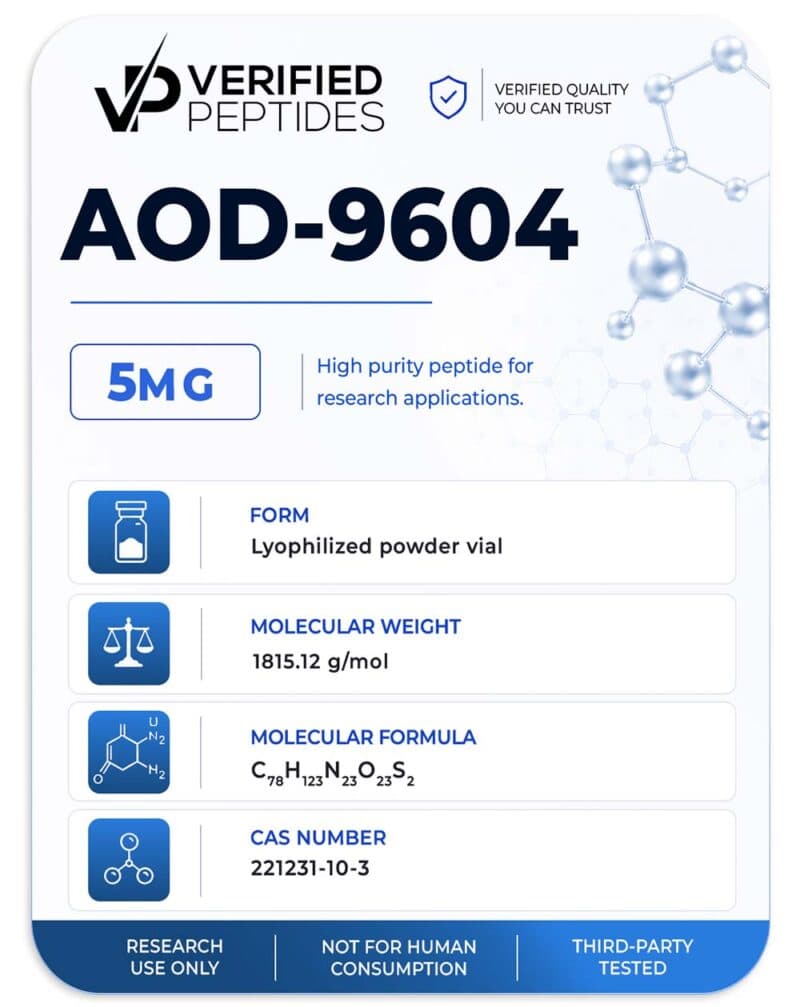
AOD-9604 Peptide (5MG)
0What is the AOD9604 Peptide?
AOD9604 is a synthetic fragment derived from the C-terminus of human growth hormone (hGH), specifically residues 177–191 with an N-terminal tyrosine modification. It was investigated for its lipolytic (fat-breaking) and antilipogenic (fat-storage preventing) activity. Prior in vitro and in vivo work linked this fragment to increased fat oxidation and lipolysis. Unlike full-length growth hormone, AOD9604 is designed to focus on metabolic effects related to fat metabolism without the broader growt
Frequently Asked Questions
What is the AOD9604 Peptide?
AOD9604 is a synthetic fragment derived from the C-terminus of human growth hormone (hGH), specifically residues 177–191 with an N-terminal tyrosine modification. It was investigated for its lipolytic (fat-breaking) and antilipogenic (fat-storage preventing) activity. Prior in vitro and in vivo work linked this fragment to increased fat oxidation and lipolysis. Unlike full-length growth hormone, AOD9604 is designed to focus on metabolic effects related to fat metabolism without the broader growt
What is the AOD9604 peptide and how is it related to hGH?
AOD9604 is a synthetic fragment derived from the C-terminal region of human growth hormone (residues 177–191 with N-terminal tyrosine). It was designed to retain the fat-metabolizing properties of hGH while minimizing broader growth-promoting effects.
What AOD9604 benefits were seen in animal models?
In animal models, AOD9604 demonstrated: reduction in white and brown adipose tissue mass, increased β3-AR mRNA expression in fat tissue, elevated plasma glycerol (indicating lipolysis), increased energy expenditure, and enhanced fat oxidation.
What are the differences between acute and chronic AOD9604 effects?
Chronic effects (over 14-28 days) involved β3-AR upregulation and sustained fat mass reduction, requiring functional β3-ARs. Acute effects (single dose) included immediate increases in energy expenditure and fat oxidation that occurred independently of β3-ARs.
What metabolic readouts changed in these experiments?
Key metabolic changes included: increased plasma glycerol (lipolysis marker), elevated fat oxidation rates measured by indirect calorimetry, increased energy expenditure, decreased glucose oxidation, and upregulated β3-AR mRNA in adipose tissue.